
When Your LLM Touches Regulated Data: What Changes About Data Governance in the Age of AI?
For decades, data governance followed a simple principle: control where data is stored, who can access it, how long it is retained, and whether it complies with regulatory requirements.
This approach worked well when enterprise systems were largely predictable. Customer records lived in databases, financial transactions flowed through controlled applications, access controls, retention policies, and compliance audits were designed around structured systems and clearly defined data flows.
Then artificial intelligence entered the enterprise. Large Language Models (LLMs) can summarize contracts, analyze medical records, generate customer responses, assist legal teams, answer employee questions, and automate business workflows. While these capabilities create significant opportunities for productivity and innovation, they also introduce a new governance challenge.
This shift is forcing organizations to rethink how governance works. For organizations handling regulated data, including personally identifiable information (PII), healthcare records, financial information, employee data, and confidential business documents.
In this article, we’ll explore how AI changes the rules of data governance, why traditional frameworks are being stretched by LLM adoption, and what organizations must do to build governance models capable of supporting AI-driven business operations.
What Counts as Regulated Data in an AI Environment?
Many organizations assume that regulated data only applies to industries such as healthcare or banking. In reality, nearly every enterprise manages information that falls under legal, contractual, privacy, or compliance obligations.
Personally Identifiable Information (PII)
Privacy regulations such as GDPR, CCPA, and various regional data protection laws impose strict requirements on how this information is collected, processed, stored, and shared. PII includes information that can identify an individual directly or indirectly.
Examples include:
- Full names
- Email addresses
- Phone numbers
- Government-issued IDs
- Customer account numbers
- Residential addresses
Protected Health Information (PHI)
Regulations such as HIPAA require organizations to protect this information and control who can access it. Healthcare organizations handle highly sensitive patient information, including:
- Medical histories
- Diagnoses
- Treatment records
- Insurance information
- Clinical notes
Financial Information
Financial regulations often require extensive monitoring, auditability, and reporting controls. Banks, fintech companies, insurance providers, and payment processors routinely manage:
- Account balances
- Credit information
- Transaction records
- Payment details
- Investment data
Employee and Workforce Data
Organizations must ensure this data remains protected even when AI systems are introduced into HR workflows. Human resources systems contain sensitive information such as:
- Compensation details
- Performance reviews
- Employment contracts
- Background checks
- Benefits information
Legal and Contractual Information
A common misconception is that data becomes less sensitive when it is processed through an AI system. Many enterprises possess confidential information that may not be regulated by government mandates but is still subject to contractual obligations.
Examples include:
- Client agreements
- Mergers and acquisitions documents
- Intellectual property
- Trade secrets
- Internal legal communications
Why Traditional Data Governance Frameworks Are Being Stretched by AI?
Most existing governance frameworks were built around predictable systems. A traditional enterprise application follows a relatively simple path:
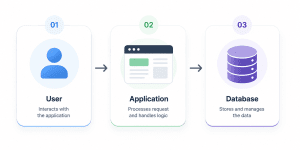
Governance controls were designed around this architecture. Organizations could establish:
- Access controls
- Data classifications
- Retention policies
- Audit logs
- Compliance procedures
AI systems introduce a more dynamic environment. Consider a modern AI-powered customer support platform.
A single user query may trigger:
- Prompt creation
- Retrieval of enterprise documents
- Model processing
- Context assembly
- External API calls
- Response generation
- Logging and monitoring
Each stage introduces new governance considerations, where the challenge is that traditional governance focuses heavily on storage.
AI governance must focus on usage. This distinction is becoming increasingly important.
The New Data Journey: Where Regulated Information Travels Inside AI Systems
One of the most important concepts for enterprise leaders to understand is that AI systems create entirely new pathways for data movement. Traditional governance teams often know where data is stored. Fewer teams fully understand where data travels once AI enters the picture.
Let’s examine the typical journey.
User Prompts
The journey often begins with a prompt.
An employee might ask:
“Summarize the customer complaint associated with account 48291.”
These prompts can immediately introduce regulated information into the AI workflow. Governance now needs visibility into what data users are submitting and whether those interactions align with organizational policies.
Uploaded Documents
Many enterprise AI systems allow users to upload files. These may include:
- Contracts
- Invoices
- Medical records
- HR documents
- Financial statements
- Legal agreements
Once uploaded, organizations must understand:
- Where files are processed
- How long are they retained
- Whether they are used for model improvement
- Who can access the content
These questions are becoming increasingly important as organizations adopt AI-powered document intelligence platforms.
Enterprise Knowledge Repositories
Many AI applications access internal knowledge sources such as:
- SharePoint
- Confluence
- Document management systems
- Knowledge bases
- Internal portals
These repositories often contain highly sensitive information. Governance controls must ensure that AI systems respect existing access permissions and business rules. An employee should not receive information through AI that they would be prohibited from accessing directly.
Model Context Windows
One of the least understood aspects of AI systems is the context window. Before generating a response, the model receives context that may include:
- User prompts
- Historical conversation data
- Business documents
- Reference materials
- Operational information
This context directly influences model behavior. As organizations scale AI adoption, understanding what enters the context window becomes a critical governance requirement.
Conversation Histories and Session Memory
Many enterprise AI platforms retain conversation histories to improve user experiences. While beneficial, conversation memory introduces additional governance considerations. Questions organizations should ask include:
- How long are conversations retained?
- Who can access historical interactions?
- Are retention policies aligned with compliance obligations?
- Can sensitive information be removed when required?
AI Agents and Autonomous Actions
The next stage of AI adoption introduces an even more complex governance challenge for AI agents. Unlike traditional chat-based AI systems that simply generate responses, AI agents can take actions.
For example, an AI agent may:
- Create support tickets
- Retrieve customer records
- Trigger workflows
- Generate reports
- Update databases
- Interact with third-party applications
In these scenarios, the governance challenge extends beyond information access.
Organizations must now govern:
- What actions AI can perform
- Which systems can it access
- Which data sources can it retrieve from
- What permissions are assigned
- How actions are monitored and approved
As AI agents become more common, governance frameworks must evolve from managing information access to managing autonomous decision-making and execution.
This represents one of the most significant shifts in enterprise governance over the last decade.
Why Auditability Becomes More Important in the Age of AI?
Many discussions around AI governance focus heavily on privacy and security. While both are important, auditability is often overlooked.
In reality, auditability is one of the foundations of effective AI governance.
Organizations operating in regulated industries are frequently required to demonstrate that appropriate controls exist around data usage, access, and decision-making.
AI systems introduce additional layers. Now organizations may need to explain:
- What information was provided to the model
- Which data sources influenced the response
- Which policies were applied
- Whether sensitive information was filtered
- Which model version generated the output
- What actions were triggered as a result
Without this visibility, proving compliance becomes significantly more difficult. This is particularly important because AI-generated outputs increasingly influence business decisions.
Examples include:
- Loan assessments
- Claims processing
- Customer support recommendations
- Clinical documentation workflows
- Employee support systems
- Legal research summaries
The more organizations rely on AI-assisted decision-making, the more important auditability becomes.
Data Lineage Is No Longer Just a Data Engineering Problem
AI significantly expands this concept. Data lineage has traditionally been associated with analytics and reporting. If a dashboard displayed a financial metric, organizations wanted to know:
- Which system supplied the data?
- Which transformations occurred?
- Which reports consumed the information?
Today, organizations increasingly need lineage for generated answers.
The Biggest Governance Risks When AI Touches Regulated Data
As organizations scale AI adoption, several governance risks repeatedly emerge across industries. Understanding these risks helps organizations prioritize controls before deployment.
Sensitive Data Exposure
AI systems can sometimes aggregate information from multiple sources, increasing the potential impact of exposure. One of the most common concerns involves accidental disclosure of regulated information.
This may occur through:
- Prompt submissions
- Generated responses
- Shared conversations
- Misconfigured permissions
- Inadequate access controls
Unauthorized Access
AI systems often act as a new access layer across enterprise knowledge. Without proper controls, users may gain visibility into information they were never authorized to access directly. This is why governance frameworks must ensure that AI respects existing access permissions rather than bypassing them.
Shadow AI Adoption
Many organizations are now developing AI usage policies specifically to address this issue. Employees increasingly use public AI tools to improve productivity. While understandable, this behavior can introduce governance challenges. Sensitive information may be entered into tools that:
- Are not approved by the organization
- Lack of contractual safeguards
- Operate under unknown retention policies
- Create compliance risks
Data Residency and Sovereignty Concerns
When AI services involve external providers or cross-border processing, governance teams must ensure regulatory obligations continue to be met. Data residency requirements continue to evolve globally. Organizations operating across regions often face obligations regarding:
- Where data is stored
- Where data is processed
- Which jurisdictions can access the information
Third-Party AI Risk
Every AI provider introduces a potential vendor risk consideration. Organizations should understand:
- Data handling practices
- Retention policies
- Security controls
- Compliance certifications
- Model governance processes
AI adoption does not eliminate vendor management responsibilities, but it increases them.
Lack of Explainability
Users may increasingly rely on AI-generated recommendations. However, trust becomes difficult when decisions cannot be explained. Organizations must balance automation with transparency. If a business decision is influenced by AI, stakeholders should have sufficient visibility into how that outcome was produced.
Building an AI-Ready Data Governance Framework
Successful AI governance requires a combination of people, processes, technology, and oversight. Organizations preparing for large-scale AI adoption should consider the following pillars.
Data Classification
AI systems should inherit these classifications rather than operate independently of them. Governance begins with understanding the sensitivity of data. Organizations should classify information based on:
- Regulatory requirements
- Business criticality
- Privacy obligations
- Confidentiality requirements
AI Access Controls
Access governance remains one of the most effective risk mitigation controls. Access policies should define:
- Which users can interact with AI systems
- Which datasets can be used
- Which actions can be performed
- Which information can be retrieved
Policy-Based Governance
Policies create consistency and accountability across teams. Organizations should establish clear AI usage policies that define:
- Approved use cases
- Approved AI providers
- Sensitive data handling requirements
- Human review expectations
- Compliance obligations
Data Masking and Tokenization
Reducing unnecessary exposure lowers governance risk. Where appropriate, organizations should minimize exposure of sensitive information through:
- Data masking
- Redaction
- Tokenization
- Anonymization
Continuous Monitoring
AI systems evolve, and Governance also changes its dynamics with it. You cannot stop governance after deployment. Organizations should continuously monitor:
- AI interactions
- Data usage patterns
- Security events
- Access anomalies
- Policy violations
Audit Logging
Strong audit trails help support compliance, investigations, and governance reviews. Comprehensive logging provides visibility into:
- User interactions
- Data access events
- Model usage
- Generated outputs
- Agent actions
Human Oversight
AI may assist decision-making, but accountability remains a human responsibility. Despite advances in AI capabilities, human accountability remains essential. Organizations should define:
- Escalation processes
- Approval requirements
- Review responsibilities
- Governance ownership
What Regulated Industries Must Do Differently?
While AI governance is important across sectors, certain industries face heightened requirements.
Healthcare
Healthcare organizations must protect patient privacy while ensuring clinical information remains accessible to authorized personnel.
Governance priorities include:
- PHI protection
- Access controls
- Audit trails
- Clinical oversight
Banking and Financial Services
Financial institutions face extensive regulatory obligations.
Key priorities include:
- Customer data protection
- Transaction transparency
- Risk monitoring
- Regulatory reporting
Insurance
AI increasingly supports claims processing, underwriting, and customer interactions.
Governance frameworks must ensure:
- Fair decision-making
- Data protection
- Auditability
- Regulatory compliance
Legal Services
Legal organizations handle highly confidential information.
Governance should focus on:
- Client confidentiality
- Document security
- Access controls
- Data residency requirements
Human Resources
AI-powered HR systems often interact with sensitive workforce information.
Organizations should carefully govern:
- Employee records
- Compensation data
- Performance information
- Internal communications
How Sarvika Helps Organizations Build AI Governance Into Their Digital Transformation Strategy?
We help organizations navigate the growing intersection of AI innovation, data governance, and regulatory compliance.
Our teams work with enterprises to design AI-ready architectures that integrate governance into every stage of the AI lifecycle, from data ingestion and policy enforcement to monitoring, auditability, and operational oversight.
We help organizations build AI systems that are not only intelligent but also secure, compliant, and trustworthy by combining expertise in data engineering, AI implementation, cloud modernization, and enterprise governance.
Conclusion
The rise of LLMs has fundamentally changed how organizations interact with information. AI introduces a new reality where data continuously moves through prompts, context windows, agents, outputs, monitoring systems, and business workflows.
As a result, governance can no longer focus solely on where data resides. It must focus on how data is used.
Organizations that adapt their governance frameworks to this new environment will be better equipped to protect sensitive information, maintain compliance, build stakeholder trust, and unlock the full value of AI responsibly.
Because when AI touches regulated data, governance becomes a strategic business capability.

Muskan Lakhotia
Senior Content Writer
Muskan Lakhotia is a Senior Content Writer at Sarvika Technologies, where she turns complex ideas into content that feels clear, sharp, and worth reading. She works across digital transformation, enterprise solutions, and service-led storytelling, with a focus on creating narratives and strategies that inform & engages with the audience. Curious by instincts and strategic with plans, she enjoys shaping content that gives brands a stronger voice, a clearer point of view, and a more human way to speak to modern businesses.