
AI-Powered Personalization in EdTech: Design Patterns & Implementation Challenges

The infusion of AI in edtech has induced speed, automation, and personalization in the industry, significantly enhancing the student engagement, comprehension, and success rates.
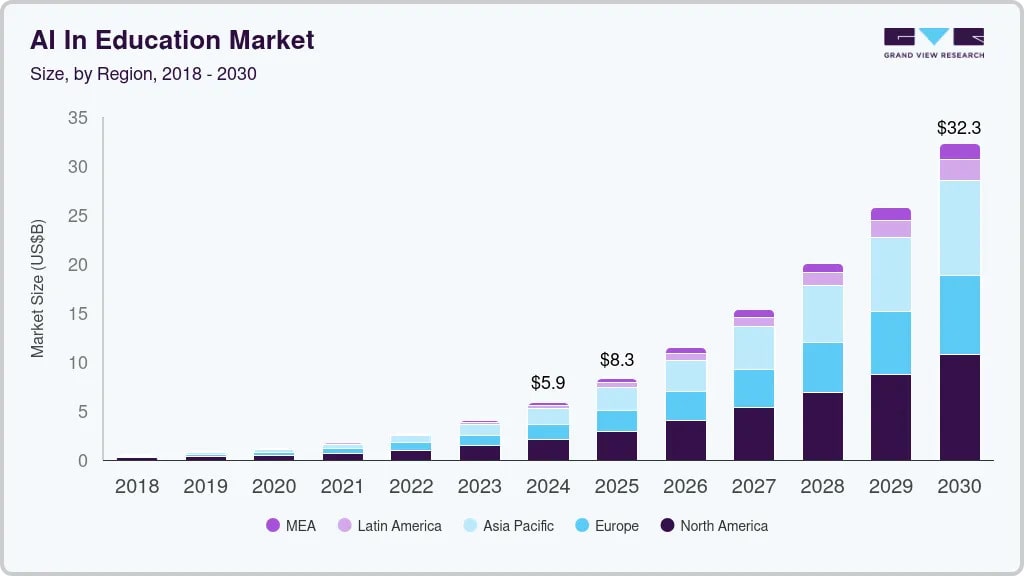
The leverage of AI in the education sector is expected to rise and is projected to reach around $32.27 billion by 2030, with a CAGR of 31.2 % as per a report by Grand View Research
But, AI with its unprecedented advantages, has brought some critical implementation challenges too, which we’ll address in this blog, with the potential solutions.
But first, let’s dive into how AI-powered personalization in edtech has revolutionised the industry. Let’s begin-
How AI-Powered Personalization Helps
AI has brought significant advantages to the education industry, and many top eLearning software development companies are leveraging these capabilities to transform digital learning experiences. We’ve highlighted some of the most impactful benefits below. Here we go –
Adaptive Learning Paths
AI-powered personalisation in edtech facilitates adaptive learning by reducing curriculum complexity as per the student’s performance, learning pace, and understanding.These capabilities are often delivered through modern LMS platforms designed for scalable and flexible learning.
Smart Content Recommendations
It automatically recommends relevant content after thoroughly analysing the learning patterns and areas of interest of an individual, keeping them hooked throughout the learning process. This is one of the key benefits of AI in the education sector, enabling highly personalised learning journeys.
Predictive Analytics
This feature adds a new layer to the AI-powered personalisation in edtech. By detecting the struggling learners early it allows room for the required improvisations, generating greater retention. Many e-learning software development services integrate predictive analytics to improve learner success rates.
Real-time Feedback
Due to AI-powered personalisation in edtech, students have access to real-time insights on their performance, progress, and areas of improvement, helping them strengthen their relatively weaker areas. These capabilities are powered by advanced Artificial Intelligence services embedded within digital learning platforms.
Dynamic Content Delivery
AI offers personalisation with features such as interactive simulations, video or text-based curriculum, allowing the learners to pick and choose their preferred learning mediums. This makes education more accessible and inclusive, especially when delivered through a feature-rich LMS ecosystem.
So now that we’ve identified how AI-powered personalization in edtech has been a boon for the industry, let’s dive into the challenges of AI implementation.

Challenges in AI Implementation
Despite the significant rise in AI adoption within the edtech space, it also brings certain challenges that need to be addressed. Let’s identify and try to overcome them-
Data Privacy Concerns
One of the prominent challenges in AI adoption is its data privacy and security issues. With a series of personal data, such as academic records, biometrics, and other sensitive information involved, this becomes extremely concerning.
Therefore, ensuring that AI-driven platforms developed by reliable e-learning software development services adhere to the latest privacy regulations is essential for building trust.
Lack of Technical Expertise
Another significant hindrance is the struggle with technical expertise while interacting with advanced technologies such as AI.
By providing adequate training and support to the faculty from skilled data scientists, AI strategists, etc, this obstacle can be navigated smoothly.
Over-reliance on the Technology
Education is not just about imparting knowledge. It’s also about infusing socio-emotional values for nurturing a secure future.
While AI can assist in many aspects of learning, it lags when it comes to emotions such as empathy, trust, and mentorship, making over-reliance on the technology harmful.
Algorithm Biasness
The AI algorithms can provide unreliable and biased information as they are trained on a limited amount of data. This may lead to the learners receiving fake or inaccurate information.
To counter this, data organisation and curation are important aspects, as they ensure the responses are based on credible sources of information.
Expenses and Accessibility
While AI brings powerful capabilities to modern education, adopting these technologies can be expensive. Implementing AI-driven tools often requires significant investment in infrastructure, advanced software, and staff training. As a result, many institutions, particularly those with limited budgets, may struggle to adopt these solutions at scale.
This cost barrier creates an accessibility gap, where students from financially stable backgrounds gain access to advanced learning tools, while those from underprivileged communities remain at a disadvantage. To bridge this divide, policymakers and educational institutions must prioritise strategies that make AI-powered learning more affordable and inclusive, ensuring equal access to emerging technologies for all learners.
These challenges highlight the ongoing efforts needed within the EdTech sector to implement modern AI technologies responsibly and equitably.
Conclusion
Undoubtedly, AI is the future of education as it makes learning adaptive, engaging, and fun. But along with its unprecedented advantages, it faces some serious challenges that have slowed down its widespread adoption.
Navigating data privacy issues, a lack of technical expertise, and other challenges requires a collaborative effort that will enable new-age technologies to serve everyone equitably.

Sarvika Technologies
Sarvika Tech is a team of young, energetic, and technology-loving people on the journey to help companies achieve their goals by supporting their IT needs. In a nutshell, we are a people’s company where the priority is their knowledge enhancement and career development. We believe that focusing on our most important asset, the team, will enable us to push boundaries and deliver ingenious IT solutions.






 Branded Solutions